The web shouldn’t trick you into buying
Many modern websites rely on dark patterns; countdown timers, fake urgency, hidden fees that pressure users into decisions they didn’t intend to make. Bryten is a browser extension designed to neutralize these tactics, giving control back to the user and restoring a calmer, more transparent browsing experience.
Bryten reframes browsing as a space built on trust instead of persuasion. Removing manipulative elements reduces cognitive noise, improves decision clarity, and shows that ethical design can enhance usability without sacrificing effectiveness.
Problem
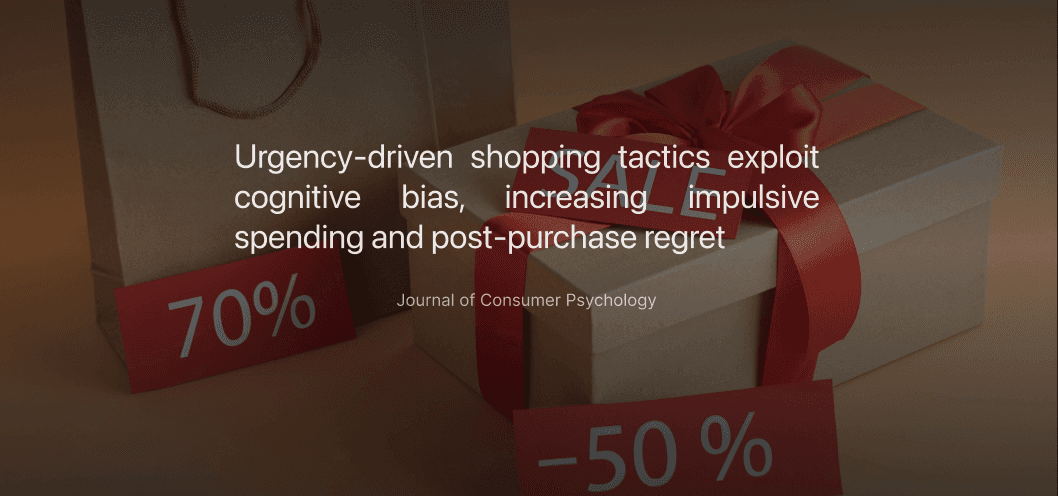
Dark patterns have quietly become a default layer of modern web design. Fake urgency, countdown timers, and deceptive prompts accumulate across browsing sessions, nudging users toward decisions they never intended to make. Purchases feel rushed, exits feel blocked, and hesitation is treated as a flaw the interface must correct.
What seems like a small interaction compounds invisibly. By the time users step back, they often feel manipulated rather than served. Traditional interfaces reward persuasion over clarity, forcing people to defend their attention instead of focusing on their goals.
Solution
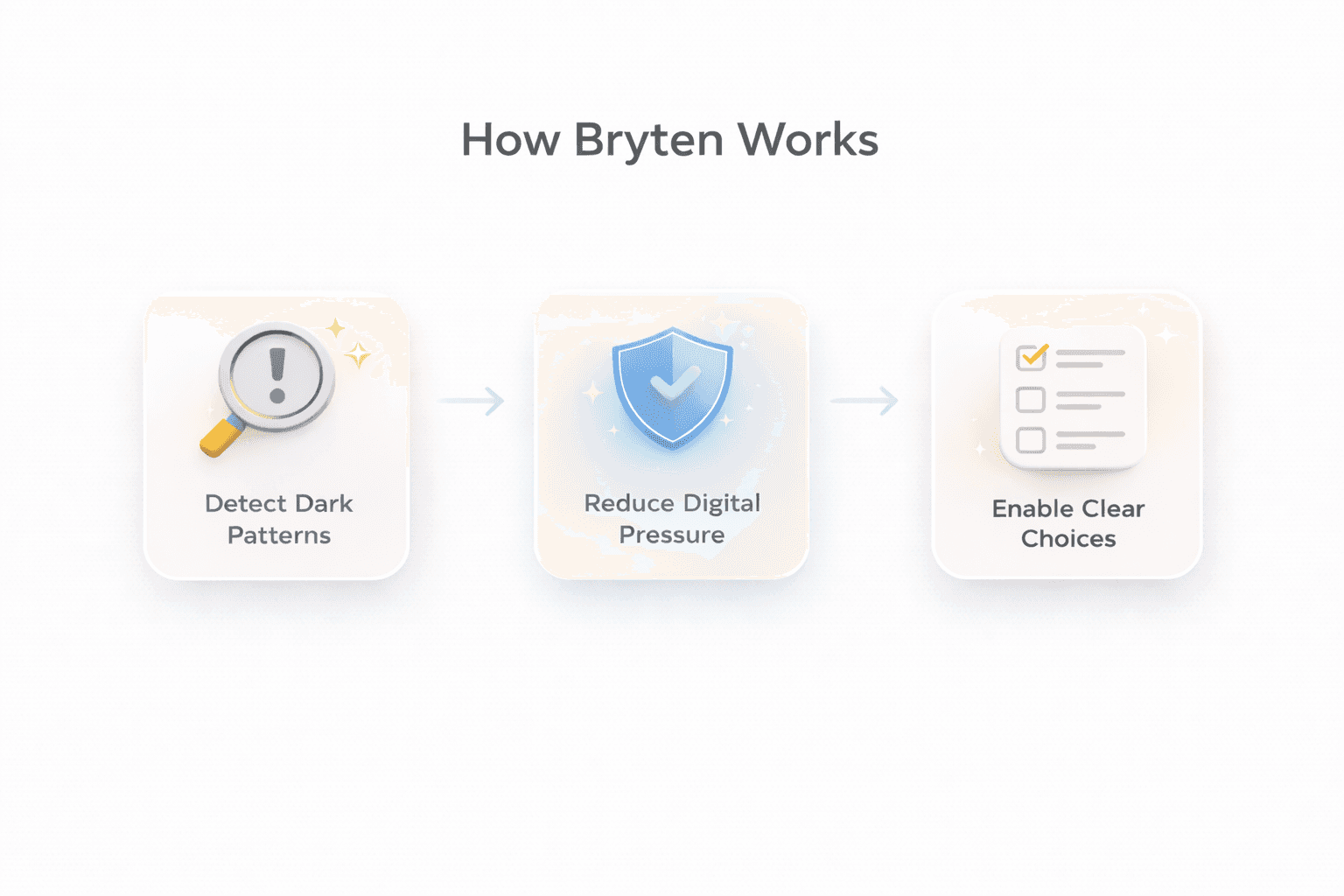
Bryten introduces a countermeasure that restores balance to web browsing. The extension removes manipulative interface elements in real time; not by blocking content, but by selectively stripping away pressure tactics while preserving the underlying experience.
Without artificial urgency competing for attention, navigation becomes quieter and more deliberate. Users engage with websites on their own terms, guided by intent rather than coercion. Bryten reframes browsing as an environment built on trust, where clarity replaces persuasion.
Ethical browsing becomes the default, not the exception.
Impact
With dark patterns removed, browsing shifts from pressure to intention. Users move faster, feel less overwhelmed, and make decisions with greater confidence because attention is no longer competing with artificial urgency. Tasks become clearer, navigation feels calmer, and trust replaces hesitation. Bryten shows that removing manipulation doesn’t weaken digital experiences, it strengthens focus, transparency, and long-term user confidence.
When Urgency Becomes the Interface
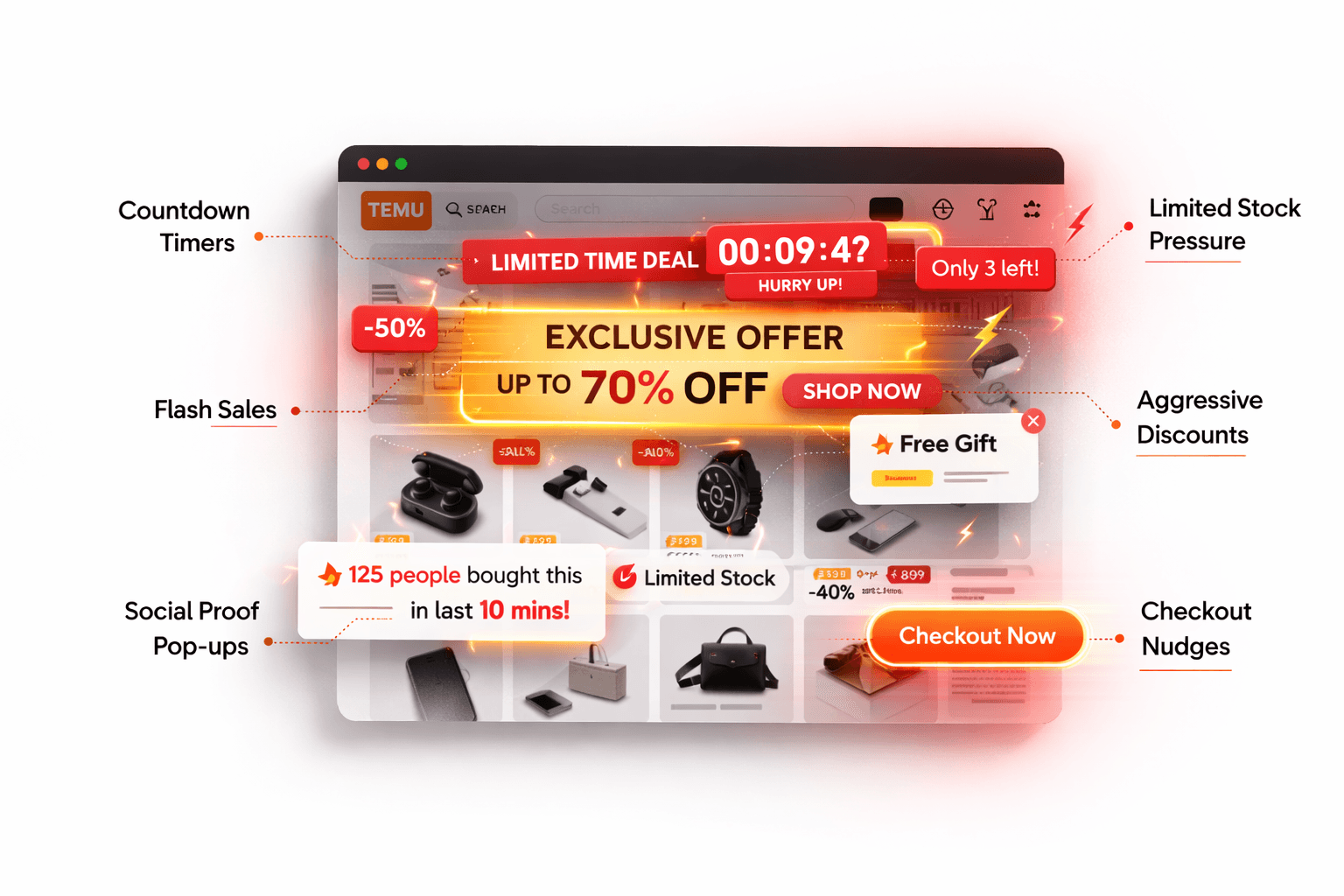
E-commerce platforms frequently embed urgency cues, countdown timers, limited-stock prompts, and aggressive promotions directly into the browsing environment. In our study, participants described Temu’s original interface as overwhelming and distracting, noting that persistent sales triggers created pressure to act quickly. What appeared promotional subtly shifted attention away from intentional product evaluation.
Rather than supporting informed choice, these mechanisms altered the decision-making context itself. Users reported being drawn toward highlighted deals even when they were unrelated to their goal. When urgency becomes structural, browsing shifts from deliberate exploration to reactive behavior.
Removing Pressure Restores Control
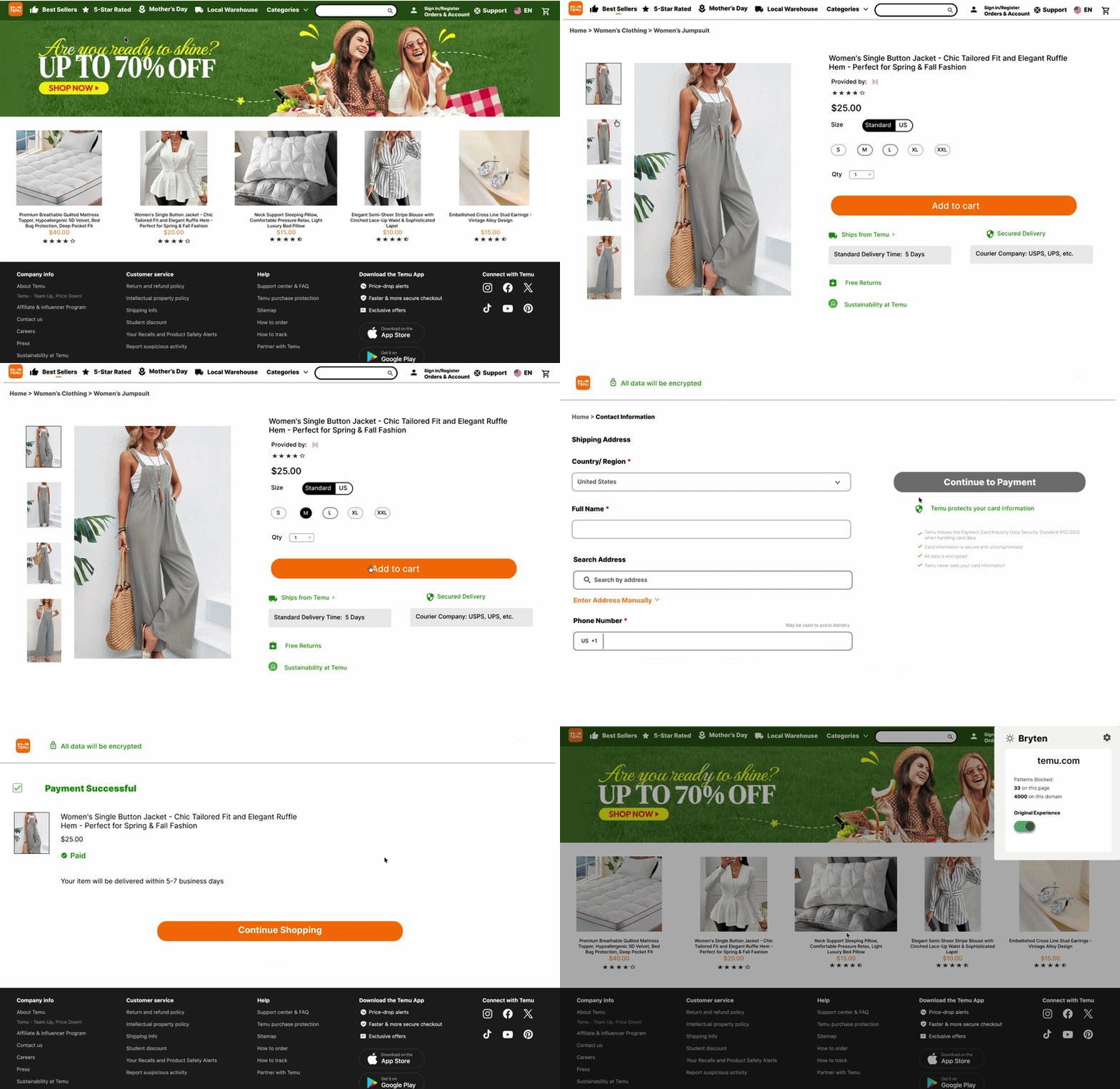
To evaluate the impact of countermeasures, we introduced a prototype that removed countdown timers, promotional pop-ups, and urgency-driven triggers from the browsing experience. The overall structure of the interface remained intact, but manipulative elements were intentionally hidden. Participants then repeated the same shopping task within this revised environment.
The shift was immediate. Users navigated more fluidly, paused less during checkout, and described the experience as calmer and more focused. Without persistent pressure cues competing for attention, decisions felt deliberate rather than reactive. By removing urgency as a design strategy, the interface returned agency to the user without compromising usability.